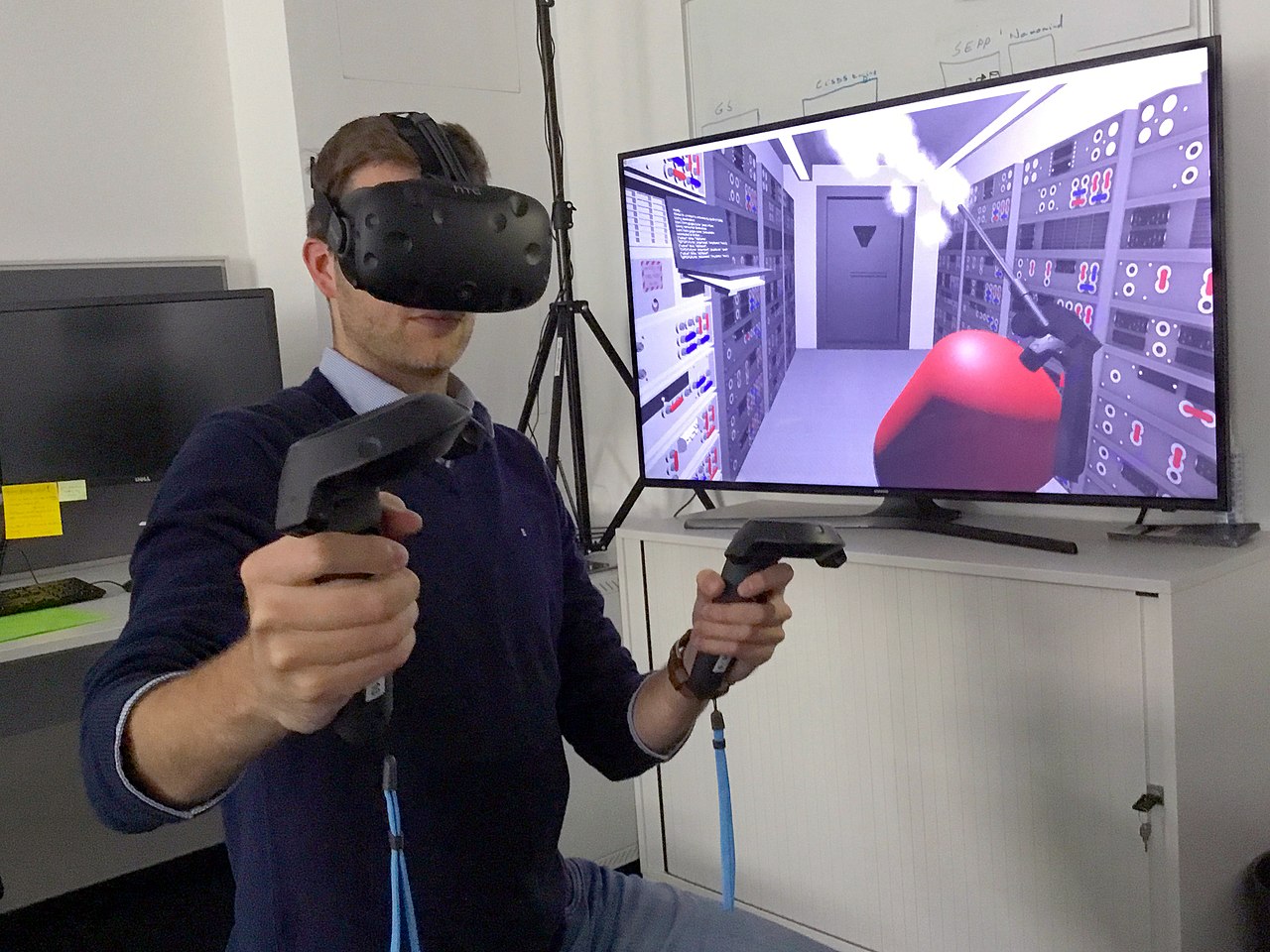
Choosing the Best VR Headset for Business: 2025 Buyer's Guide
Virtual reality (VR) technology has transitioned from a niche gaming novelty to an indispensable strategic asset for businesses worldwide. As we step into 2025, VR is no longer just about immersive entertainment; it's a cornerstone of innovation, efficiency, and competitive advantage across diverse industries. From revolutionizing employee training and intricate product design to facilitating global virtual meetings and creating captivating marketing experiences, the applications of a well-chosen VR headset for business are vast and growing.
The sheer pace of technological advancement means the market is brimming with diverse VR solutions, each promising unique benefits. This abundance, while exciting, can make selecting the optimal vr headset for business needs an overwhelming task. This comprehensive guide aims to demystify the choices, exploring top VR headsets for businesses in 2025 and outlining the critical factors—performance, features, cost, and specific industry use cases—that will drive your decision. Whether you're a VR novice eager to explore its potential or an experienced enterprise looking to upgrade your existing setup, this article provides the insights needed to make an informed investment.
Indeed, the enterprise adoption of VR is surging. Recent forecasts, like those from IDC, project that by the end of 2028, global VR headset shipments will reach approximately 24.7 million units annually, with a significant portion earmarked for business users. This burgeoning demand has prompted leading vendors like Meta, HTC VIVE, Pico, and Varjo to develop specialized, business-focused solutions, highlighting the technology's strategic importance in the modern workplace.
Why VR is Revolutionizing the Business Landscape
The shift towards VR in the enterprise sector is driven by tangible benefits that directly impact operational efficiency, cost savings, and strategic growth. Organizations are discovering that a properly implemented vr headset for business can unlock capabilities previously unattainable with traditional methods.
- Enhanced Training & Simulations: VR offers a safe, repeatable, and highly immersive environment for training. Employees can practice complex procedures, hazardous tasks, or customer service scenarios without real-world risks or costs, leading to higher retention rates and faster skill acquisition.
- Improved Collaboration & Remote Work: Virtual meeting spaces and collaboration platforms allow distributed teams to interact as if they're in the same room. This fosters stronger connections, streamlines design reviews, and enables global teams to work together on 3D models and projects in real-time.
- Accelerated Product Development & Design: Engineers and designers can visualize, prototype, and iterate on products in a 3D virtual space, dramatically reducing the need for physical prototypes and speeding up the design cycle. This allows for earlier identification of flaws and more creative problem-solving.
- Innovative Marketing & Sales: Businesses can create captivating virtual showrooms, product demonstrations, or immersive brand experiences that engage customers on a deeper level, transforming how products are presented and sold.
- Data Visualization & Analytics: Complex datasets can be rendered in 3D, allowing for more intuitive understanding and discovery of patterns that might be missed in 2D formats.
Key Factors to Consider When Choosing Your VR Headset for Business
Before committing to a particular vr headset for business, a thorough evaluation against specific criteria is paramount. Your choice should align perfectly with your company's objectives, existing infrastructure, and budget. For a deeper dive into these critical considerations, explore our detailed guide on VR for Business: Essential Factors for Choosing Your Headset.
- Performance and Graphics: For applications like architectural visualization, engineering design, or high-fidelity training simulations, pristine visuals and smooth performance are non-negotiable. Look for high-resolution displays (pixels per eye), a wide field of view (FOV), and a high refresh rate (Hz) to minimize motion sickness and maximize immersion. A powerful processor (for standalone headsets) or robust PC connectivity (for tethered devices) is crucial.
- Comfort and Ergonomics: If VR sessions are expected to be lengthy, comfort is paramount. Headsets should be lightweight, well-balanced, and feature adjustable straps and face gaskets that accommodate various head shapes and even glasses. Poor comfort can lead to user fatigue and hinder adoption.
- Compatibility and Software Ecosystem: The chosen headset must integrate seamlessly with your existing enterprise software, whether it's CAD programs, learning management systems (LMS), collaboration platforms, or bespoke industrial applications. Investigate the vendor's software development kit (SDK) support, third-party app availability, and enterprise-focused operating systems.
- Scalability and Management: For larger organizations planning widespread deployment, the ability to efficiently manage multiple devices is critical. Look for features like Mobile Device Management (MDM) integration, remote provisioning, bulk configuration, and dedicated enterprise support channels to streamline IT operations.
- Cost and Total Cost of Ownership (TCO): Beyond the initial hardware price, consider ongoing costs. These include software licenses, content development (or subscription to content libraries), maintenance, potential PC upgrades for tethered systems, and user training. Balance upfront investment with long-term value.
- Tracking and Input: Accurate and precise tracking is fundamental for most business applications. Inside-out tracking (no external sensors needed) offers greater flexibility, while outside-in (external base stations) can provide superior accuracy for specific use cases. Evaluate controller ergonomics, hand-tracking capabilities, and advanced features like eye-tracking, which can provide valuable analytics on user attention and interaction.
- Security and Privacy: Especially for sensitive corporate data or proprietary designs, enterprise-grade security features are vital. This includes secure boot processes, data encryption, user authentication, and clear policies on data handling and privacy compliance (e.g., GDPR, HIPAA if applicable).
Top VR Headsets for Business in 2025: A Snapshot
The VR market continues to evolve rapidly, with several contenders vying for the top spot in the enterprise sector. While this guide offers an overview, for comprehensive reviews and comparisons, check out our article on the Best VR Headsets for Business in 2025: Top Picks & Features.
1. Meta Quest 3 Pro
The Meta Quest 3 Pro (or its successor expected in 2025) builds upon Meta's legacy of accessible, powerful standalone VR, pushing capabilities further for professional use. It's a versatile, all-in-one mixed reality headset that eliminates the need for high-end PCs or external hardware, making it exceptionally flexible for various business environments.
- Key Features: Boasts impressive resolution, often around 2200 x 2200 pixels per eye, delivering crystal-clear visuals crucial for design reviews and detailed training. Powered by a robust Qualcomm Snapdragon XR2 Gen 2 processor, it ensures smooth, consistent performance. Its high-quality color passthrough cameras enable advanced mixed reality (MR) capabilities, allowing users to blend virtual objects with their physical surroundings—ideal for AR prototyping or collaborative work within a real office.
- Software Ecosystem: Access to Meta's extensive ecosystem of business and productivity applications, including platforms like Horizon Workrooms for immersive virtual meetings and collaborative workspaces.
- Comfort: Designed for extended use, featuring a lightweight, balanced design with adjustable straps and often improved facial interfaces for enhanced comfort.
- Best For: Small to medium-sized businesses (SMBs) seeking a flexible, cost-effective, and highly accessible VR solution. It excels in virtual collaboration, mixed reality prototyping, general training, and onboarding programs where ease of deployment and a broad app library are prioritized.
2. HTC Vive XR Elite
The HTC Vive XR Elite stands out as a premium VR/AR headset explicitly engineered for enterprise-level applications. Its modular design offers unparalleled adaptability, allowing businesses to customize the headset for specific needs, such as removing the battery cradle for tethered PC VR use or adding specific accessories.
- Key Features: Delivers high-resolution visuals, often featuring dual LCD panels providing around 1920 x 1920 pixels per eye with a wide FOV. Equipped with robust processors and advanced tracking, it ensures precise interactions. Its full-color passthrough cameras provide excellent mixed reality capabilities, perfect for blending digital information with real-world tasks. The device is built with durability in mind, catering to demanding professional environments.
- Enterprise Focus: Supported by the VIVE Business ecosystem, which includes dedicated software, device management tools, and enterprise-grade security features.
- Best For: High-end enterprise applications, specialized industrial training, complex design reviews, architectural walkthroughs, and AR-enabled workflows. Its modularity makes it suitable for businesses that require a highly adaptable solution that can switch between standalone and PC-tethered modes, prioritizing robustness and customization.
3. Pico 4 Enterprise / Pico Neo 3 Pro Eye (and successors)
Pico has firmly established itself as a strong contender in the enterprise VR space, offering solutions that balance performance, features, and competitive pricing, often with a significant focus on business-specific needs.
- Key Features: Pico headsets typically feature crisp displays, comfortable designs, and powerful Snapdragon XR processors. Key differentiators often include integrated eye-tracking (in models like the Neo 3 Pro Eye or specific Enterprise variants) which provides valuable analytics on user gaze and attention, crucial for training effectiveness assessment or research. They prioritize an open Android-based operating system for easier integration and custom development.
- Enterprise Management: Pico provides comprehensive device management solutions, making them a strong choice for large-scale deployments that require centralized control and monitoring.
- Best For: Companies requiring specific features like eye-tracking for detailed analytics in training, psychological research, or user experience studies. They are also excellent for large-scale deployments in education, healthcare, and manufacturing, particularly where a balance of cost-effectiveness and enterprise-grade features is required.
Implementing VR in Your Business: Practical Tips
Choosing the right vr headset for business is just the first step. Successful integration requires strategic planning and execution:
- Define Clear Objectives: Before purchasing, clearly articulate what problems VR will solve and what measurable outcomes you expect. Are you aiming for reduced training costs, faster product cycles, or enhanced collaboration?
- Start Small, Scale Up: Consider piloting VR with a small team or department. This allows you to gather feedback, refine use cases, and demonstrate ROI before a broader rollout.
- Content is King: The headset is merely the delivery mechanism; the true value lies in the content. Evaluate whether off-the-shelf VR applications meet your needs or if custom content development is required. Factor this into your budget.
- User Training and Support: Provide adequate onboarding for new users and establish accessible technical support channels. Ease of use and confidence in support are vital for adoption.
- Infrastructure Readiness: Ensure your network infrastructure can handle the demands of VR, especially for multi-user experiences or cloud-based content. Plan for device charging, storage, and sanitation if headsets are shared.
- Budget for Total Cost of Ownership: Remember to account for software licenses, content creation/subscription, ongoing maintenance, and potential future upgrades when budgeting for your VR initiative.
Conclusion
The era of VR transforming business is unequivocally here. As 2025 unfolds, the strategic implementation of a high-quality vr headset for business offers unparalleled opportunities for innovation, efficiency, and competitive advantage. By carefully considering key factors such as performance, comfort, compatibility, scalability, and security, and by matching these to your specific enterprise needs and budget, you can make an informed decision that drives tangible value.
Whether you opt for the versatile Meta Quest 3 Pro, the adaptable HTC Vive XR Elite, or a robust enterprise solution from Pico, the right VR solution will empower your teams, enhance your products, and prepare your business for the immersive future. Embrace this technology thoughtfully, and watch your organization thrive in the virtual age.